

Storm Water Management
Have you ever thought about what happens to filtering oil, grease, and other toxic materials that are deposited on our roadways, roofs, parking lots, and driveways by human activity?
For the most part, rain water washes toxins from roadways into gutters and drains, which are routed directly into our waterways. Aquatic life is extremely sensitive to pollutants. Bioswales, rain gardens, and ecoroofs increase the time it takes for polluted water to get into our waterways, allowing for filtering and breakdown of toxins. Also, properly designed rain gardens and bioswales can reduce flooding, recharge groundwater aquifers, and provide beneficial wildlife habitat.
Another simple approach is the use of permeable paving surfaces for parking lots, driveways, roads, or paths. These allow water to percolate into the ground below, reducing runoff and filtering solids and pollutants.
Sol Coast can help you design a storm water management approach for your residential or commercial property.
Storm Water Management and Low Impact Development Explained:
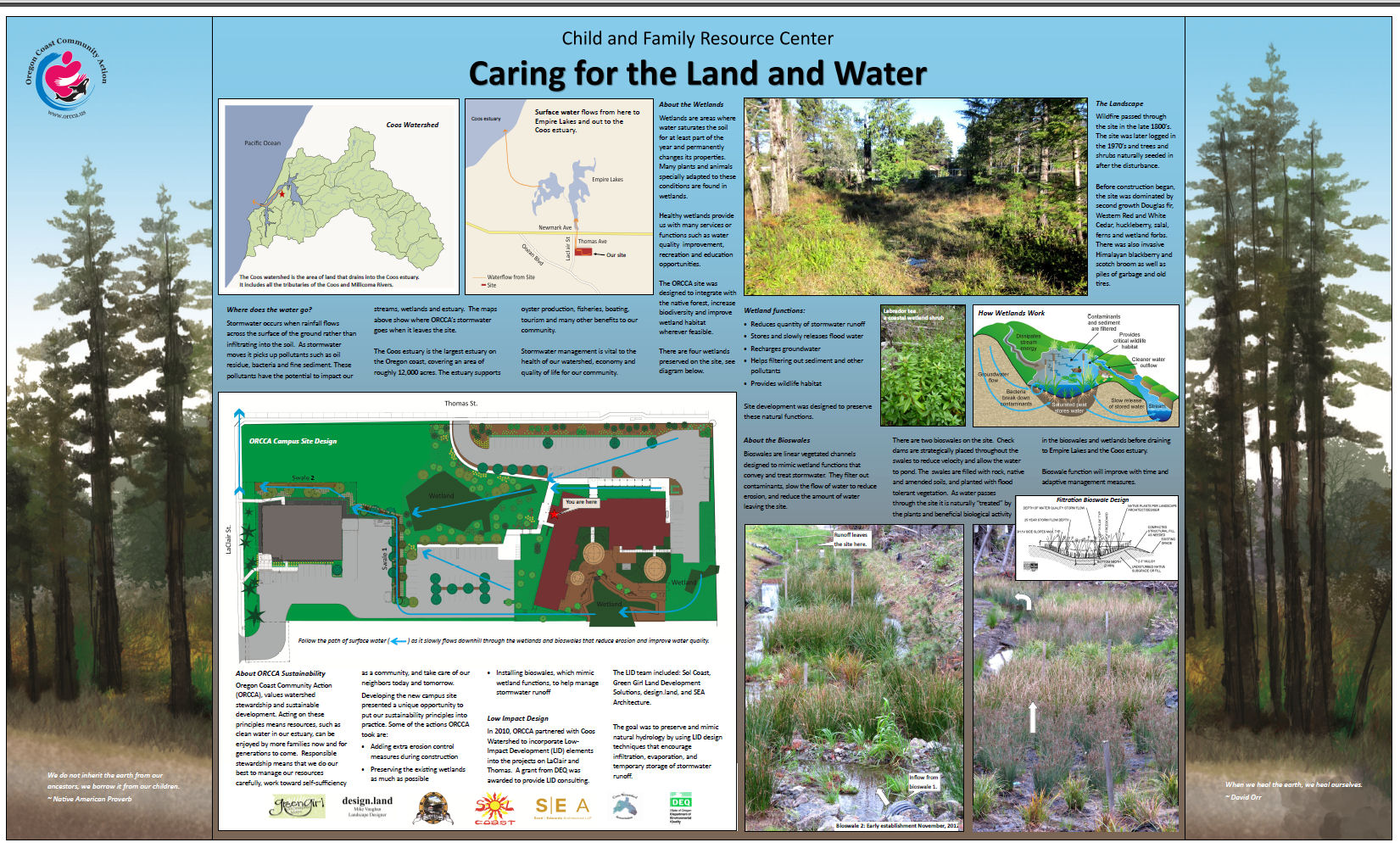
Click on the image to view a larger version or CLICK HERE for a printable PDF!
Check out the following resources to find out more:
Oregon Rainwater Guide: http://seagrant.oregonstate.edu/sgpubs/onlinepubs/h10001.pdf
Oregon Environmental council: http://www.oeconline.org/our-work/rivers/stormwater
Pervious paving: http://www.oregonmetro.gov/index.cfm/go/by.web/id=25101